
JS meaning in text is usually “Just Saying.” People use this short abbreviation in texts, DMs, comments, and casual online conversations when they want to share an opinion, observation, suggestion, or comment without making it sound too serious.
For example, someone might text, “That movie was overrated, JS.” In this sentence, JS means “Just Saying.”
However, context matters. In a conversation about coding or websites, JS usually means JavaScript, not “Just Saying.” The sentence, topic, tone, punctuation, and relationship between the people chatting can help you identify the intended meaning.
This guide explains what JS means, how people use it, what it means on popular social platforms, how to reply, and how to avoid common misunderstandings.
What Does JS Meaning in Text & Chat?
In everyday texting and online chat, JS most commonly means “Just Saying.”
People typically place it after an opinion, suggestion, observation, compliment, or mild criticism. It can signal that the speaker is simply putting a thought out there rather than demanding agreement.
Think of it as a conversational cushion.
For example:
“You should probably leave earlier next time, JS.”
The person is giving advice, but JS makes the message feel more casual.
It does not automatically make the statement polite, though. A harsh sentence can still sound harsh even when someone adds JS.
Quick examples:
- “That restaurant is better on weekdays, JS.”
- “You look better in blue, JS 😊.”
- “Maybe check your answer again, JS.”
- “That movie was kind of boring, JS.”
- “You should probably text her back, JS.”
In each example, JS means “Just Saying.”
The abbreviation can also appear as js in lowercase. Lowercase is especially common in casual texting because people often type quickly without worrying about capitalization.
When Should You Use JS in a Text?
Use JS when you want to add a casual thought, opinion, suggestion, or observation.
It works best in relaxed conversations with friends, classmates, family members, followers, or other people who understand informal texting language.
Common reasons to use JS include:
- Sharing a personal opinion
- Giving casual advice
- Making an observation
- Adding a mild criticism
- Making a playful comment
- Giving a suggestion
- Softening a statement
- Showing that you are not demanding agreement
For example, instead of saying:
“You need to save more money.”
A casual message could be:
“You might want to save a little more, JS.”
The second version still communicates the point, but it sounds less like an instruction.
That said, JS isn’t ideal for formal emails, academic writing, job applications, or serious professional communication. In those situations, writing the complete thought usually makes your meaning clearer.
How to Tell What JS Means From Context
Context is the easiest way to understand JS.
Look at the words surrounding the abbreviation and ask what the conversation is about.
If a friend writes:
“That outfit looks amazing, JS.”
JS almost certainly means “Just Saying.”
But if a developer writes:
“The JS isn’t loading on the page.”
JS almost certainly means JavaScript.
A simple context test can help:
- Casual conversation: JS probably means “Just Saying.”
- Opinion or advice: “Just Saying” is very likely.
- TikTok, Instagram, Snapchat, or WhatsApp: It usually means “Just Saying.”
- Coding or web development: JS usually means JavaScript.
- Technical or specialized material: Check the surrounding terminology before deciding.
Tone matters, too. An emoji such as 😊 or 😂 can make JS feel playful, while a blunt sentence followed by “JS.” may sound sarcastic or defensive.
Full Form, Stands For & Short Meaning of JS
The most common full form of JS in casual texting is:
JS = Just Saying
In simple terms, it means:
“I’m sharing this thought or opinion, but I’m not necessarily trying to argue with you.”
JS can act as a discourse marker. It frames the statement around it and tells the reader how the speaker wants the comment to be interpreted.
For example:
“I think the original song was better, JS.”
The speaker is expressing a personal opinion rather than presenting it as an unquestionable fact.
Other possible meanings:
JS can have different meanings depending on the subject.
- Just Saying: Most common in casual texting.
- JavaScript: Common in programming and web development.
- Just: Sometimes used informally as a context based shortening, although this is not the standard interpretation.
- Just Kidding: Occasionally claimed as a texting meaning, but it is much less established than “Just Saying.”
- Just So: Can appear in some context specific uses.
You should not assume that every possible expansion has the same popularity. In ordinary chat, “Just Saying” remains the clearest interpretation. Current slang references also consistently identify it as the primary texting meaning.
Simple breakdown:
| Element | Meaning |
|---|---|
| Abbreviation | JS |
| Main texting meaning | Just Saying |
| Typical use | Opinion, advice, observation, comment |
| Tone | Casual, friendly, playful, blunt, or sarcastic |
| Common platforms | Texts, DMs, WhatsApp, Instagram, TikTok, Snapchat |
| Technical meaning | JavaScript |
| Formality | Informal |
Origin, History & First Known Use of JS
The phrase “just saying” existed in spoken English before people started shortening it in digital messages.
As SMS, instant messaging, chat rooms, and social media became popular, users increasingly adopted abbreviations to communicate faster. Short forms such as JS fit naturally into this environment because they reduced typing while keeping the intended meaning recognizable.
The exact first use of JS as an abbreviation for “Just Saying” is difficult to establish from ordinary online language records. Therefore, it is better to describe its development as part of broader internet and texting culture rather than assign it to one specific person or date.
The abbreviation became especially useful because “just saying” already worked as a conversational phrase.
Why it became popular:
- It is quick to type.
- It fits casual conversations.
- It can soften an opinion.
- It works well in comments and DMs.
- It can add humor or teasing.
- Most readers can understand it from context.
Modern social platforms have also encouraged short, conversational language. TikTok comments, Instagram DMs, Snapchat messages, and group chats all favor quick communication.
How People Use JS in Daily Conversations
JS usually appears after a statement, although people can also place it before a comment.
For example:
“JS, I think you should go.”
and
“I think you should go, JS.”
Both communicate the basic idea of “Just Saying,” but the position can affect the rhythm and tone.
Common situations:
People commonly use JS when:
- Giving advice
- Sharing an opinion
- Making an observation
- Pointing something out
- Offering a suggestion
- Making a playful remark
- Giving a mild warning
- Adding a personal perspective
Examples:
Opinion:
“That restaurant is too expensive, JS.”
Advice:
“You should probably leave earlier, JS.”
Compliment:
“That color really suits you, JS 😊.”
Observation:
“You’ve been quiet today, JS.”
Mild criticism:
“You could have told me earlier, JS.”
Playful comment:
“You two would make a cute couple, JS 👀.”
Tone variations:
The meaning stays the same, but the emotional effect can change.
Friendly:
“That outfit looks great, JS 😊.”
This sounds like a casual compliment.
Neutral:
“You missed one question, JS.”
This sounds like a simple observation.
Playful:
“You really thought that was a good idea, JS 😂?”
This may sound teasing.
Sarcastic:
“Yeah, because that worked perfectly, JS 🙃.”
Here, js meaning in text does not make the sentence genuinely polite. The surrounding words create the sarcastic tone.
Defensive:
“I wasn’t trying to criticize you, JS.”
This can suggest that the speaker knows their comment might be taken negatively.
Current explanations of JS meaning in text also emphasize that tone can range from friendly and conversational to sarcastic, blunt, or defensive depending on the sentence.
JS Meaning Across WhatsApp, Instagram, TikTok & Snapchat
The basic js meaning in text usually stays the same across social platforms, but people may use it differently depending on the type of conversation.
On WhatsApp, JS commonly appears in personal chats and group conversations.
Example:
“You should call him first, JS.”
Here, the sender is offering casual advice.
On Instagram, JS can appear in DMs, comments, captions, or replies.
Example:
“That filter looks better on the second picture, JS.”
The abbreviation keeps the comment casual rather than overly serious.
TikTok
TikTok comments often use short slang and abbreviations.
Example:
“JS, the original version was better 😂.”
In this setting, JS meaning in text can introduce a personal opinion or playful disagreement.
Snapchat
Snapchat conversations are usually quick and informal, so short abbreviations fit naturally.
Example:
“You disappeared all day, JS 😅.”
The emoji helps make the message feel lighter.
Across these platforms, the surrounding sentence remains more important than the platform itself. Current search results similarly identify WhatsApp, Instagram, TikTok, Snapchat, DMs, and group chats as common environments for JS.
Different Meanings of JS in Other Fields
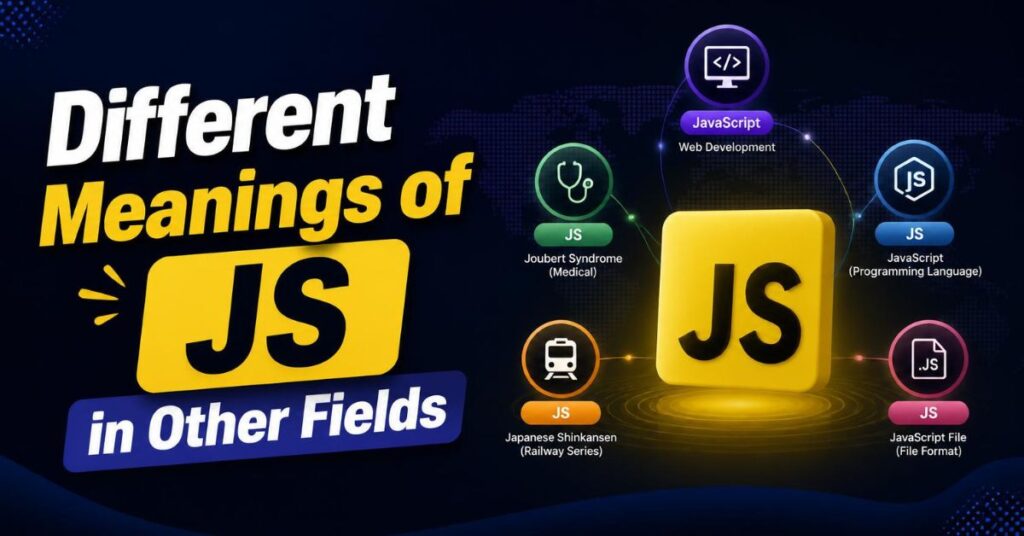
JS meaning in text does not belong exclusively to internet slang.
The most important alternative meaning is JavaScript, a programming language widely used in web development.
Common alternative meanings:
JavaScript
If someone says:
“The JS isn’t working.”
They probably mean JavaScript.
Job Safety
In some workplace contexts, JS may be used as an abbreviation related to job safety.
Journal System
This may appear in specific academic or technical contexts, although it is not a standard everyday meaning.
Other fields may also use JS as initials, an organization abbreviation, a name abbreviation, or a field specific term.
Tip:
Never interpret an abbreviation without checking the subject.
Friend texting you:
“JS, that was funny.”
Meaning: Just Saying
Developer discussing a website:
“The JS needs an update.”
Meaning: JavaScript
This context based approach prevents most mistakes. Multiple current references also emphasize that JS can shift meaning between casual chat and technical discussions.
Common Confusions, Mistakes & Wrong Interpretations
Because JS is short, readers can easily misunderstand it.
Common mistakes:
- Assuming JS always means JavaScript
- Assuming JS always means “Just Saying”
- Treating every use as friendly
- Ignoring sarcasm
- Missing the importance of emojis
- Reading the abbreviation without the surrounding sentence
- Assuming less common expansions are equally common
Another common mistake is thinking that JS automatically makes criticism polite.
It doesn’t.
Compare:
“You should have known better, JS.”
This can still sound harsh.
Now compare:
“Maybe double check it next time, JS 😊.”
The second message feels much softer because the wording and emoji change the tone.
Example confusion:
Message:
“You really picked that one, JS.”
This could be teasing, criticism, or a genuine observation.
The relationship between the speakers and the previous messages can reveal the intended meaning.
How to avoid confusion:
When you see JS, check:
- What is the conversation about?
- What does the sentence say?
- Is JS before or after the statement?
- Are there emojis?
- Does the sender normally use slang?
- Is the conversation technical?
- Does the message sound serious, playful, or sarcastic?
If the meaning remains unclear, asking the sender is better than guessing.
Similar Terms, Alternatives & Related Slang
JS belongs to a wider group of texting abbreviations that help people communicate quickly.
Alternatives:
- IMO: In My Opinion
- TBH: To Be Honest
- FYI: For Your Information
- Just saying: Full phrase
- Just sayin’: Informal spoken style
Differences:
JS vs IMO
IMO directly introduces an opinion. JS often feels more conversational and can soften a comment.
JS vs TBH
TBH usually signals honesty or frankness. JS often sounds lighter and less formal.
JS vs FYI
FYI provides information. JS usually presents a personal thought, opinion, or observation.
For example:
“IMO, the blue one looks better.”
This directly identifies an opinion.
“The blue one looks better, JS.”
This sounds more conversational and slightly softer.
Examples of JS in Real Chat Situations
Here are realistic examples of how JS can appear in everyday conversations:
Friend: “Should I buy these shoes?”
You: “The black ones look better, JS.”
Friend: “I’m thinking about skipping the event.”
You: “You might regret missing it, JS.”
Friend: “Which photo should I post?”
You: “The second one is better, JS 😊.”
Friend: “I think that movie was amazing.”
You: “I honestly thought it was overrated, JS 😂.”
Friend: “Why didn’t you tell me earlier?”
You: “I thought you already knew, JS.”
Friend: “Do you think they like each other?”
You: “They definitely act like they do, JS 👀.”
These examples show why tone matters. The same abbreviation can sound supportive, teasing, critical, or neutral.
How to Reply When Someone Says JS
You do not need a special response when someone uses . Simply respond to the actual point they made.
Possible responses:
If you agree:
“Yeah, you’re probably right.”
If you’re unsure:
“Hmm, maybe.”
If you disagree:
“I don’t think so 😅.”
If you want more information:
“What makes you say that?”
If they’re joking:
“Lol, I know what you mean 😂.”
If the message feels unclear:
“Wait, what do you mean?”
The best response depends on the sentence before JS, not the abbreviation itself.
Is JS Still Popular? Trends & Online Usage
Yes. JS remains recognizable in casual online communication in 2026, particularly in texts, DMs, comments, group chats, and social media conversations.
Its appeal comes from simplicity. It is short, easy to understand, and useful when someone wants to add an opinion without making the conversation sound overly formal.
Why it’s still trending:
- It saves typing time.
- It works across several platforms.
- It fits informal communication.
- It can soften a comment.
- It works with humor and sarcasm.
- It is easy to understand from context.
New slang appears constantly, but older abbreviations can remain useful because people already understand them. Current 2026 search results continue to describe JS meaning in text as a common casual texting abbreviation.
FAQs
1. What does JS meaning in text?
In texting, JS usually means “Just Saying.” It commonly introduces an opinion, observation, suggestion, or casual comment.
2. Is JS rude or polite?
JS can sound polite, casual, playful, sarcastic, or even dismissive depending on the sentence and tone.
3. Does JS always mean Just Saying?
No. In casual chat it usually means “Just Saying,” while in coding conversations it commonly means JavaScript.
4. What does JS meaning in text in programming?
In programming, JS usually means JavaScript, a programming language widely used to build interactive websites and applications.
5. How do I know what JS meaning in text?
Look at the conversation topic. Casual chat usually points to “Just Saying,” while coding or web development usually points to JavaScript.
Internal Linking Suggestions
For a website about texting slang and online language, useful internal links could include:
- LOL Meaning in Text
- TBH Meaning in Chat
- IMO Meaning Explained
- FYI Meaning in Text
- Common Texting Abbreviations Guide
- TikTok Slang Meanings
- Instagram Chat Abbreviations
- Popular Internet Slang Terms
Use descriptive anchor text that clearly tells readers what they will find after clicking.
Conclusion
The JS meaning in text is usually “Just Saying.” People use it to share an opinion, suggestion, observation, compliment, or mild criticism in a casual way.
Its tone depends heavily on context. A friendly emoji can make JS feel playful, while a blunt sentence can make it sound sarcastic or dismissive.
The easiest rule is simple:
Casual texting = Just Saying.
Coding or web development = JavaScript.
Specialized context = Check the surrounding information.
Once you look at the topic, wording, punctuation, emojis, and relationship between the speakers, JS meaning in text becomes much easier to understand.

