
Seeing “JS” at the end of a text can leave you wondering what the sender really means. Is it slang, a quick opinion, or something related to coding?
In most casual texts, JS means “Just Saying.” People use it after an opinion, suggestion, observation, or comment to make the message sound more relaxed. However, the tone can change depending on the words around it.
For example, “That movie was overrated, JS” usually means “That’s just my opinion.” In a programming conversation, however, “JS” almost certainly means JavaScript.
So, context matters. This guide explains the JS meaning in text, how people use it, what it means across popular apps, and how to reply when someone sends it.
What Does JS Meaning in Text & Chat?
In texting and casual online chat, JS usually means “Just Saying.”
People use the abbreviation to add a personal thought without making it sound like a firm command or serious argument. It often appears at the end of a sentence.
Think of “JS” as a small conversational cushion. The sender says something, then adds “just saying” to signal that they’re sharing a thought rather than demanding agreement.
For example:
“You should probably get some sleep, JS.”
The sender isn’t necessarily criticizing you. They’re simply offering an opinion in a casual way.
However, “JS” doesn’t automatically make every message friendly. If the statement itself sounds harsh, the abbreviation can come across as sarcastic or passive-aggressive.
Quick examples:
- “That movie was pretty boring, JS.”
- “You should leave earlier next time, JS.”
- “The blue one looks better, JS.”
- “You two actually look good together, JS.”
- “That wasn’t your best idea, JS.”
In each example, JS means “Just Saying.” The exact tone depends on the surrounding message.
When Should You Use JS in a Text?
Use JS when you’re chatting casually and want to add an opinion, suggestion, observation, or mild criticism.
It works particularly well with friends, classmates, group chats, and social media conversations. It’s less suitable for formal emails, business messages, academic writing, or serious professional communication.
You can use it when:
- Sharing your opinion
- Giving casual advice
- Making an observation
- Suggesting an alternative
- Pointing something out
- Adding a playful comment
- Making a mild criticism
For example, instead of writing:
“You should check the address again.”
You could text:
“You should check the address again, JS.”
The second version feels more conversational. Still, don’t treat “JS” as a magic politeness button. A blunt message can remain blunt even with two friendly-looking letters at the end.
How to Tell What JS Means From Context
The easiest way to understand JS meaning in text is to look at the conversation before interpreting the abbreviation.
Start with the topic.
If you’re talking about a friend’s outfit, relationship, movie, schoolwork, or weekend plans, “Just Saying” is the likely meaning.
If you’re discussing code, websites, software, or web development, JavaScript is much more likely.
Consider these two examples:
“That outfit looks better in black, JS.”
Here, JS means Just Saying.
“I need to fix the JS before deploying the website.”
Here, JS means JavaScript.
Tone provides another clue. A friendly emoji can make the phrase feel playful, while a sharp statement followed by “JS” may sound like a dig.
Look at:
- The topic
- The sentence around “JS”
- The sender’s usual writing style
- Emojis
- Punctuation
- Your relationship with the sender
The app itself isn’t enough to determine the meaning. Someone can use “JS” on Instagram to mean “Just Saying,” while another person can use it on Instagram while discussing JavaScript.
Full Form, Stands For & Short Meaning of JS
The most common full form of JS in texting is “Just Saying.”
It is an informal abbreviation of the phrase people use in everyday conversation when they want to express a thought without presenting it as an absolute fact.
JS = Just Saying
A related form you may also see is:
“Just sayin’”
Both expressions communicate a similar idea.
Other possible meanings:
Depending on the situation, JS can refer to:
- Just Saying: Common in casual texting
- Just Sayin’: Informal variation of “Just Saying”
- JavaScript: Common in programming and technology
- Junior School: Possible in education-related contexts
- Just: Occasional informal shorthand in some online writing
Some abbreviations have dozens of meanings across specialized fields. That doesn’t mean every meaning applies to everyday texting.
For casual messages, “Just Saying” remains the interpretation to consider first.
Simple breakdown:
| Term | Meaning |
|---|---|
| JS | Just Saying |
| Main use | Casual texting and online chat |
| Tone | Casual, conversational, or opinion-based |
| Common placement | Usually at the end of a statement |
| Technical meaning | JavaScript |
| Formal writing | Usually avoid it |
Origin, History & First Known Use of JS
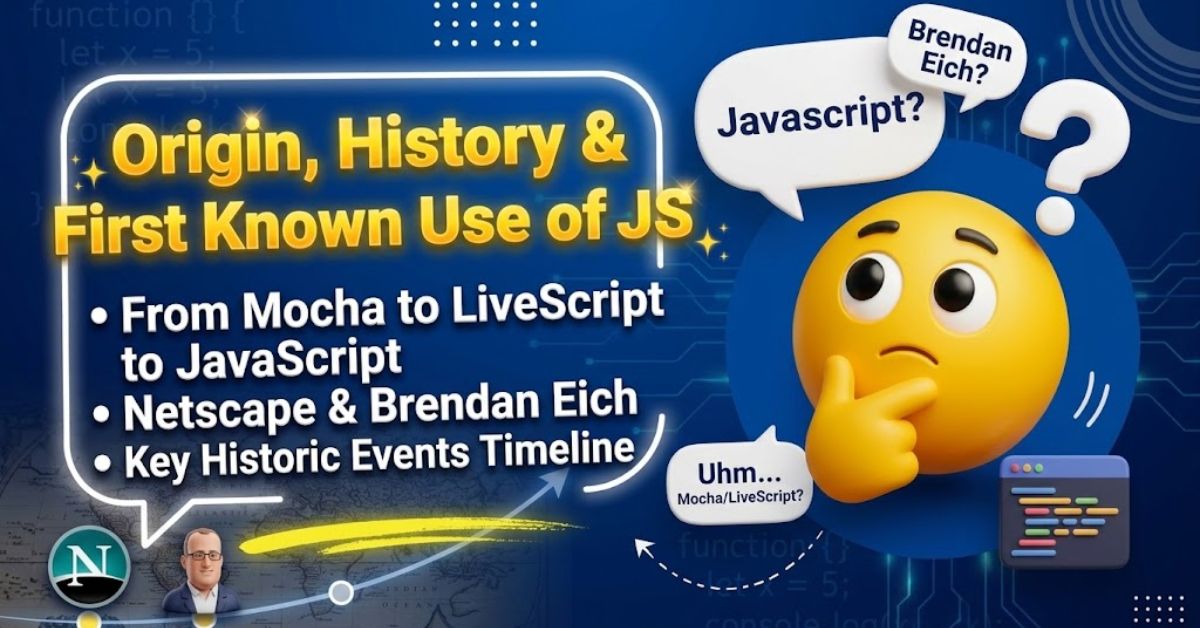
The expression “just saying” comes from ordinary spoken English. People have long used phrases such as “I’m just saying” after expressing an opinion or making an observation.
Text messaging later encouraged people to shorten familiar expressions. Abbreviations made quick conversations easier, especially when people wanted to type less.
“JS” fits that pattern because two letters can replace a longer phrase.
There isn’t a reliable reason to assign one exact date as the first use of JS in texting. Online slang often develops gradually across message boards, chat platforms, SMS, and social media rather than appearing on one specific day.
Why it became popular:
- It’s extremely short.
- It works in casual conversations.
- It can soften an opinion.
- It’s easy to recognize from context.
- It fits fast-moving online conversations.
- It can add personality to a message.
The phrase also has a useful social function. It lets someone make a point while signaling that the statement is their personal take.
How People Use JS in Daily Conversations
People use JS in everyday conversation when they want to express something without making the statement feel overly formal.
It can introduce a suggestion, soften an observation, or add a little attitude to a comment.
For example, a friend might say:
“You should probably bring a jacket, JS.”
That doesn’t necessarily mean they’re ordering you to bring one. They’re simply giving you their opinion.
Common situations:
Giving advice:
“You should go to bed earlier, JS.”
Sharing an opinion:
“I think the first movie was better, JS.”
Making an observation:
“You two have been talking a lot lately, JS.”
Making a suggestion:
“Maybe try the blue one, JS.”
Offering mild criticism:
“You could’ve told me earlier, JS.”
Making a playful comment:
“You definitely knew what you were doing, JS 😂.”
Examples:
Friend: “Should I buy these shoes?”
Reply: “The black ones look better, JS.”
Friend: “I’m staying up all night again.”
Reply: “You’re going to regret that tomorrow, JS.”
Friend: “Do you think they like each other?”
Reply: “They’ve been texting all day, JS 👀.”
Tone variations:
Friendly:
“That color looks great on you, JS 😊.”
This usually sounds like a casual compliment.
Neutral:
“The second option seems better, JS.”
This sounds like a straightforward opinion.
Playful:
“You definitely knew that would happen, JS 😂.”
The abbreviation adds a teasing feel.
Critical:
“You probably should’ve checked first, JS.”
This can sound slightly judgmental.
Sarcastic:
“Great plan. Nothing could go wrong, JS 🙃.”
Here, “JS” doesn’t make the statement genuinely polite. The surrounding words create the sarcasm.
JS Meaning Across WhatsApp, Instagram, TikTok & Snapchat
The basic meaning of JS usually stays the same across social platforms. What changes is the conversational setting.
On WhatsApp, people commonly use JS in private messages and group chats.
Example:
“You should ask her first, JS.”
The sender is probably offering casual advice.
On Instagram, JS can appear in DMs, comments, or replies.
Example:
“This picture is definitely your best one, JS.”
Here, the abbreviation makes the opinion feel informal.
TikTok
TikTok comments often rely on short expressions, humor, and exaggerated reactions.
Example:
“That trend is getting old, JS 😂.”
The phrase may sound playful or slightly sarcastic.
Snapchat
Snapchat conversations tend to be quick and informal, so short abbreviations fit naturally.
Example:
“He keeps viewing your story, JS 👀.”
Depending on the conversation, this could sound teasing, curious, or suggestive.
Across all four platforms, the conversation topic matters more than the app.
Different Meanings of JS in Other Fields
Not every use of JS refers to texting slang.
The abbreviation appears in several areas, especially technology.
Common alternative meanings:
JavaScript:
In programming, JS commonly refers to JavaScript, a programming language widely used for interactive websites and applications.
Junior School:
In education, some contexts use JS as an abbreviation for Junior School.
Job Safety:
Certain workplace documents may use JS as shorthand for job safety or related terminology.
Other specialized abbreviations:
Organizations and industries may assign their own meanings to JS.
Tip:
Don’t decide what JS means from the abbreviation alone.
Instead, ask:
“What are we talking about?”
If you’re discussing a date, movie, outfit, or friendship, “Just Saying” makes sense. If you’re discussing code, browsers, websites, or programming, “JavaScript” is the stronger interpretation.
Common Confusions, Mistakes & Wrong Interpretations
Because JS is short, it’s easy to misread.
The biggest mistake is assuming that one meaning works everywhere.
Common mistakes:
- Assuming JS always means “Just Saying”
- Assuming JS always means JavaScript
- Treating JS as automatically polite
- Ignoring sarcasm
- Overlooking emojis
- Reading the abbreviation without the full sentence
- Using JS in a formal message
Another common mistake is assuming that the abbreviation changes meaning because of the platform.
It doesn’t necessarily.
A TikTok comment can use JS for “Just Saying.” A TikTok creator discussing coding could use JS for JavaScript.
Example confusion:
Consider:
“I don’t know JS.”
If the conversation is about programming, the likely meaning is:
“I don’t know JavaScript.”
Now consider:
“That wasn’t the best idea, JS.”
Here, the likely meaning is:
“That’s just my opinion.”
Same two letters. Completely different meaning.
How to avoid confusion:
Use the surrounding context as your first clue.
Then check the topic, tone, punctuation, emojis, and relationship between the people chatting.
If you’re still unsure, simply ask:
“Do you mean Just Saying?”
That’s much better than guessing and accidentally responding to the wrong meaning.
Similar Terms, Alternatives & Related Slang
Several texting abbreviations overlap with the purpose of JS.
Alternatives:
- IMO: In My Opinion
- TBH: To Be Honest
- NGL: Not Gonna Lie
- FYI: For Your Information
- Just saying: Full phrase
- No offense: A phrase sometimes used before criticism
- I think: Direct way to introduce an opinion
Differences:
JS vs. IMO:
IMO directly labels something as your opinion. JS usually sounds more casual.
JS vs. TBH:
TBH signals honesty or frankness. JS often softens or qualifies a comment.
JS vs. NGL:
NGL introduces a candid statement. JS often appears after an opinion or observation.
JS vs. FYI:
FYI provides information. JS usually expresses a personal thought.
These terms can overlap, but they don’t carry exactly the same tone.
Examples of JS in Real Chat Situations
Here are natural examples showing how people might use JS in everyday conversations:
1. Giving advice
“You should probably charge your phone before leaving, JS.”
Meaning: The sender is casually recommending it.
2. Sharing an opinion
“I liked the first episode more, JS.”
Meaning: The sender is sharing a personal preference.
3. Making an observation
“You’ve been smiling at your phone all day, JS 👀.”
Meaning: The sender noticed something and is pointing it out.
4. Giving a compliment
“That hairstyle really suits you, JS.”
Meaning: The sender is casually complimenting you.
5. Mild criticism
“You could’ve checked the instructions first, JS.”
Meaning: The sender thinks you should have checked them.
6. Playful teasing
“You definitely knew you’d get caught, JS 😂.”
Meaning: The sender is teasing you.
7. Sarcasm
“Yeah, because that was such a smart decision, JS.”
Meaning: The sender probably means the opposite.
8. A subtle hint
“He keeps reacting to your stories, JS 👀.”
Meaning: The sender may be hinting that someone is interested.
The surrounding words create the real tone. JS simply adds another layer to the message.
How to Reply When Someone Says JS
Your response depends on what the person actually meant.
If they’re sharing an opinion, you can agree or disagree. If the message feels unclear, ask what they mean.
Possible responses:
Agreeing:
“Yeah, you’re probably right.”
Neutral:
“Hmm, maybe you’re right.”
Disagreeing:
“I don’t really see it that way 😅.”
Asking for clarification:
“What makes you say that?”
Playful:
“Okayyy, just saying 😂.”
If the comment feels rude:
“Are you trying to tell me something?”
You don’t need a special response just because someone used JS. Treat it like a normal conversational comment and match the sender’s tone.
Is JS Still Popular? Trends & Online Usage
Yes, JS remains recognizable in casual online communication in 2026.
Its appeal comes from simplicity. People can communicate the idea of “Just Saying” with only two letters.
However, calling it the newest or most viral slang would be misleading. JS is better described as a familiar texting abbreviation that continues to appear in casual digital conversations.
Why it’s still trending:
- It’s quick to type.
- The meaning is easy to understand.
- It works across different chat settings.
- It can soften an opinion.
- It fits casual social media language.
- It adds tone without adding many words.
At the same time, newer slang continues to appear. That means individual communities may use JS differently or less frequently.
The safest approach is simple: read the context before interpreting the abbreviation.
FAQs
1. What does JS mean in texting?
In texting, JS usually means “Just Saying.” It often adds a casual opinion, observation, suggestion, or comment.
2. Is JS rude or polite?
JS can sound friendly, neutral, sarcastic, or slightly critical depending on the message and context.
3. Does JS always mean Just Saying?
No. In programming, JS commonly means JavaScript, while other fields may use the abbreviation differently.
4. What does JS mean in programming?
In programming, JS usually means JavaScript, a programming language used extensively for web development and interactive applications.
5. How do I know what JS means?
Check the conversation topic, surrounding words, tone, punctuation, and emojis. Casual conversation usually points to “Just Saying.”
Internal Linking Suggestions
For a topical cluster around texting slang, consider linking naturally to related pages covering:
- LOL meaning in text
- TBH meaning in chat
- IMO meaning
- NGL meaning in text
- FYI meaning in text
- Common texting abbreviations
- Popular internet slang
- Social media abbreviations
Use descriptive anchor text that matches the actual topic of each destination page. Avoid adding links where they don’t help the reader.
Conclusion
The JS meaning in text is usually “Just Saying.” People use it to share an opinion, suggestion, observation, compliment, or mild criticism in a casual way.
Its tone isn’t fixed. A friendly message can make JS sound harmless, while a sharp sentence can make the same abbreviation feel sarcastic or passive-aggressive.
Context solves most of the confusion.
If the conversation involves friends, social media, everyday plans, or personal opinions, “Just Saying” is the most likely meaning. If you’re talking about coding or web development, JS probably means JavaScript.
When in doubt, read the whole message instead of focusing on the two letters alone.
Meta Description:
JS meaning in text usually means “Just Saying.” Learn its uses, tone, examples, social media meanings, and JavaScript distinction.

